You launch a Meta campaign, the numbers start coming in, and at first it looks promising. Your CTR is decent. CPC isn't terrible. Traffic is landing on your site. People are clearly interested enough to click. But conversions? Almost nothing.
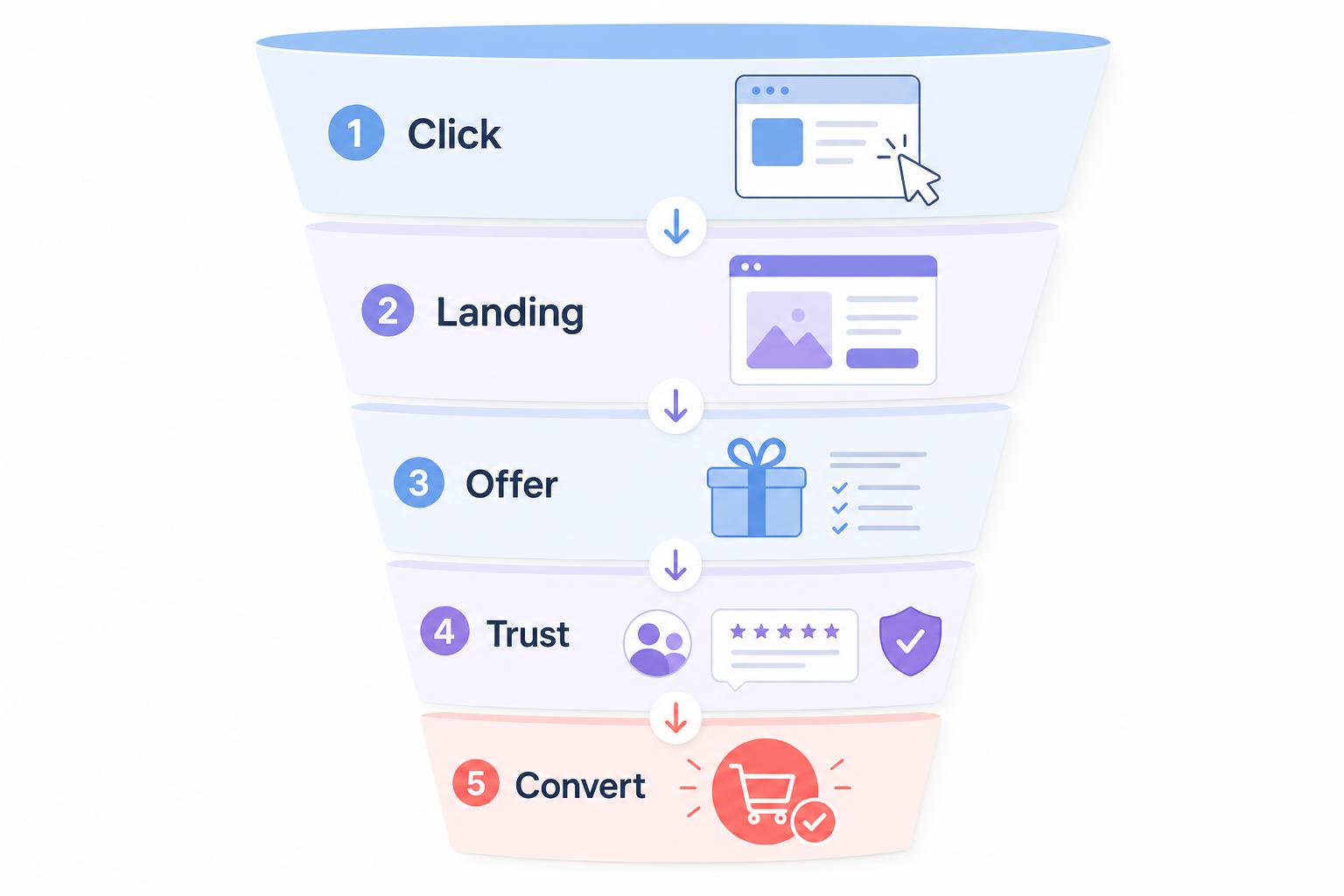
A click only proves your ad was compelling enough to win attention. It does not prove your message, audience, offer, landing page, and conversion experience are aligned well enough to produce a result.
In this guide, we will break down why Meta ads can get clicks but still fail to convert, how to tell whether the problem is your creative, audience, landing page, offer, or tracking, which metrics to check before changing anything, how to fix the most common click-to-conversion leaks, and how to review ad creatives before they burn more budget.
Clicks Are Not the Same as Conversion Intent
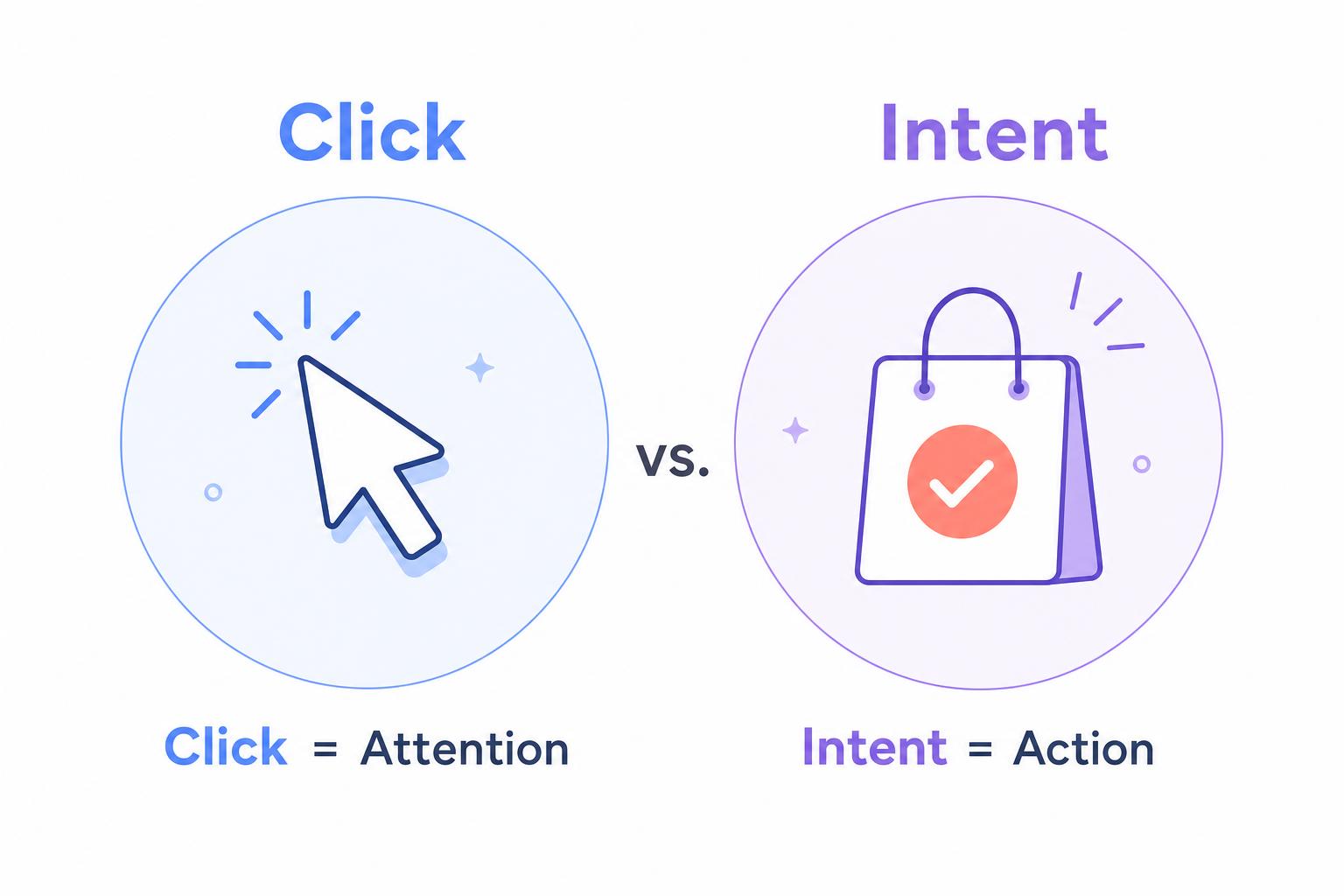
A click can happen for all kinds of reasons: the hook triggered curiosity, the visual stood out in the feed, the ad created fear of missing out, the offer looked interesting but not compelling enough to act on, or the messaging was broad enough to attract the wrong audience. Clicks measure interest at the ad level. Conversions measure alignment across the entire journey.
Why This Happens So Often in Meta Ads
Meta is exceptionally good at generating attention. It's a visual, interruption-based platform. A good ad can stop users in their tracks. But attention does not automatically mean the user is ready to buy. Meta's system also optimizes based on the objective and event signals you feed it. If your campaign setup, conversion signals, or event quality are weak, you may attract people who are likely to click but not necessarily likely to convert.
The 7 Biggest Reasons Your Meta Ads Get Clicks But Don't Convert
1) Your ad creates curiosity, but not buying intent
The ad gets the click because it's intriguing, emotional, dramatic, or entertaining, but it doesn't do enough to qualify the click or attract the right intent. Curiosity clicks often create a mismatch between why the person clicked and what they actually wanted.
- Call out the audience more clearly
- Mention the problem and the mechanism
- Set the right expectation about the offer
- Reduce vague curiosity hooks that pull in low-intent traffic
2) Your landing page doesn't match the promise of the ad
If your ad says one thing and your landing page says something else, you create friction the moment the user lands. Strong message match reassures users they've landed in the right place; weak message match breaks momentum.
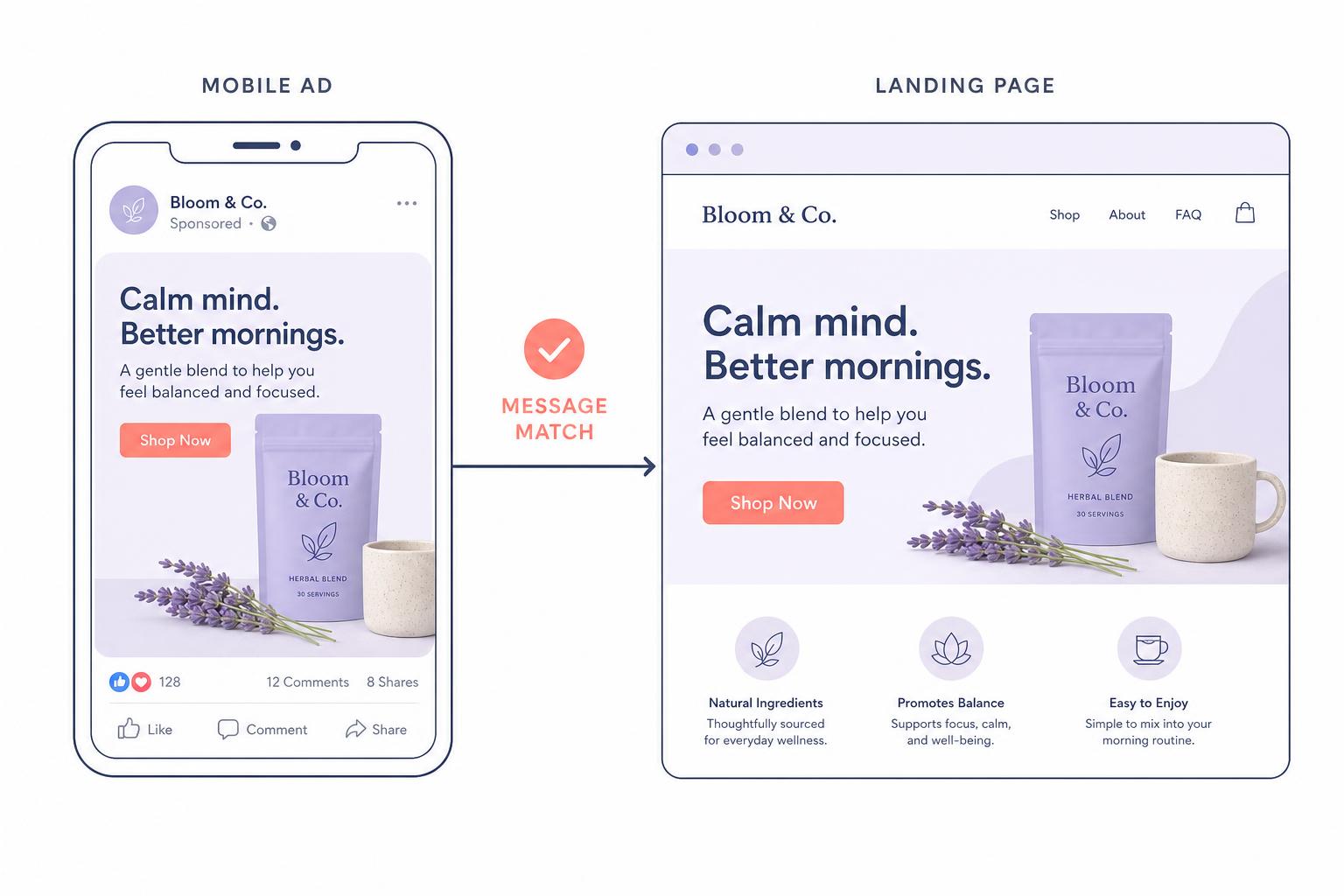
- Repeat the same core promise in the headline
- Use similar language and framing
- Show the same product or offer immediately
- Keep the visual tone consistent
- Make the CTA feel like the logical next step from the ad
3) The offer is weak, unclear, or not compelling enough
Sometimes the ad is doing its job. The traffic is relevant. The landing page loads. But the offer itself just isn't strong enough. Common issues include pricing that feels too high relative to perceived value, benefits that aren't specific enough, no reason to buy now, and no risk reversal, guarantee, or proof.
- Clarify the outcome
- Explain why it's different
- Reduce risk with guarantees, free returns, or trials
- Add urgency only if it's real
- Show value in concrete terms, not vague claims
4) Your ad is attracting the wrong kind of click
Not all clicks are equal. Sometimes your ad is actively attracting the wrong audience segment even if the targeting isn't terrible. This happens when the hook is too broad, the creative is entertaining but not qualifying, or the promise appeals to bargain hunters when you sell a premium product.
- Call out the business type, stage, or problem
- Mention who the offer is best for
- Be specific about the use case
- Use proof and positioning that resonates with the right buyer
- Avoid curiosity hooks that anyone can click
5) Your landing page has too much friction
Sometimes the ad is fine and the offer is solid, but the landing page simply makes conversion harder than it should be. Meta traffic is often colder than search traffic, so your page has less margin for friction.
- Does the page load fast enough on mobile?
- Is the headline clear within 2 seconds?
- Can the user understand the offer without scrolling?
- Is the CTA visible early?
- Is checkout or form completion unnecessarily long?
6) You don't have enough trust to close the click
A click is not a commitment. It's the start of evaluation. Once someone lands, they ask: Can I trust this brand? Is this product legit? If your page doesn't answer those questions fast enough, conversion rate drops.
- Testimonials with specifics
- UGC or customer proof
- Guarantees or trial language
- Shipping and returns clarity
- Founder credibility or brand story
7) Tracking or attribution is broken
Sometimes your Meta ads are influencing conversions, but your setup is underreporting them. Meta recommends using both the Pixel and Conversions API to create a more reliable event signal and improve measurement.
- Are key conversion events firing correctly?
- Is the Pixel installed on the right pages?
- Is Conversions API set up and deduplicated properly?
- Do Meta, GA4, Shopify, and your CRM tell a coherent story?
A Simple Diagnostic Framework to Find the Real Bottleneck
Step 1: Check the quality of the click
Review CTR, outbound CTR, CPC, bounce rate, time on page, and scroll depth. High CTR plus high bounce plus very low time on page often suggests a weakly qualified click. High CTR plus decent time on page plus no action suggests the user was interested but something blocked conversion.
Step 2: Compare the ad promise to the landing page promise
Does the landing page headline continue the same message as the ad? Is the same benefit visible above the fold? Does the product or offer look like what the ad implied? If the answer to multiple questions is not really, you likely have a message match problem.
Step 3: Review whether the offer is actually compelling
Is the value proposition obvious? Is the offer stronger than the alternatives? Is the pricing justified clearly? Is there a reason to act now? If the offer is weak, more traffic won't fix it.
Step 4: Audit conversion friction on the page
Look at product page clarity, add-to-cart visibility, checkout flow, form length, CTA clarity, above-the-fold positioning, and mobile usability. How many decisions is the page asking the visitor to make?
Step 5: Validate your tracking before you overreact
Check event firing, deduplication, Pixel plus Conversions API setup, conversion window expectations, and discrepancies between ad platform and site-side analytics. Tracking won't fix a bad offer, but broken tracking can make a healthy campaign look broken.
How to Tell If the Problem Is the Creative, Not the Landing Page
- CTR is healthy, but landing page behavior is weak immediately
- Comments reveal confusion about what the product is or how much it costs
- The ad overpromises relative to the page
- The creative is optimized for attention, not relevance
- The ad doesn't qualify the user
How to Tell If the Landing Page Is the Real Problem
Signs the page is likely the bottleneck: users stay on page for a meaningful amount of time but don't act, add-to-cart or form-start rate is weak relative to click quality, heatmaps show confusion or rage clicks, the page takes too long to load on mobile, the value proposition is buried, and the CTA is unclear or too low.
How to Fix Meta Ads That Get Clicks but Not Conversions
Fix #1: Rewrite the ad to pre-qualify the click better
Call out the audience directly, make the problem more specific, mention the product category or offer structure, and reduce vague curiosity hooks. A more specific ad gets fewer irrelevant clicks.
Fix #2: Improve message match between ad and landing page
Your ad and page should feel like one continuous conversation. Align the headline, offer framing, core benefit, target audience, proof angle, CTA language, and visuals where possible.
Fix #3: Strengthen the offer
- Clarify the outcome in plain language
- Show why the product or service is different
- Add a real incentive or bonus
- Reduce risk with a guarantee, trial, or transparent return policy
- Make urgency or scarcity believable, not fake
Fix #4: Remove landing page friction
Speed up mobile load time, simplify the hero section, make the CTA visible early, reduce unnecessary sections, and simplify forms and checkout. A Meta landing page should answer these questions almost immediately: What is this? Who is it for? Why should I care? Why should I trust it? What do I do next?
Fix #5: Add proof and trust signals
Add reviews, customer photos or UGC, testimonials with specifics, guarantees, delivery and returns clarity, and media mentions or expert endorsements where relevant. Trust is often the difference between interesting and I'm ready to buy.
Fix #6: Validate your tracking and event setup
Ensure the Pixel is installed correctly, Conversions API is set up where appropriate, key events are mapped to the right actions, deduplication is configured, and thank-you pages or purchase events are firing properly.
Metrics to Look At Before You Blame the Ad
High CTR plus weak landing engagement suggests a creative qualification or message-match issue. Good landing engagement plus weak conversion suggests an offer, trust, or page friction issue. Good on-site behavior plus suspiciously low reported conversions suggests a tracking issue.
- Ad-level: CTR, outbound CTR, CPC, CPM, frequency
- Landing page: landing page views, bounce rate, time on page, scroll depth, product view or form-start rate
- Conversion: add-to-cart rate, initiate checkout rate, purchase conversion rate, lead form completion rate, CPA, ROAS
A Click-to-Conversion Audit Checklist for Meta Ads
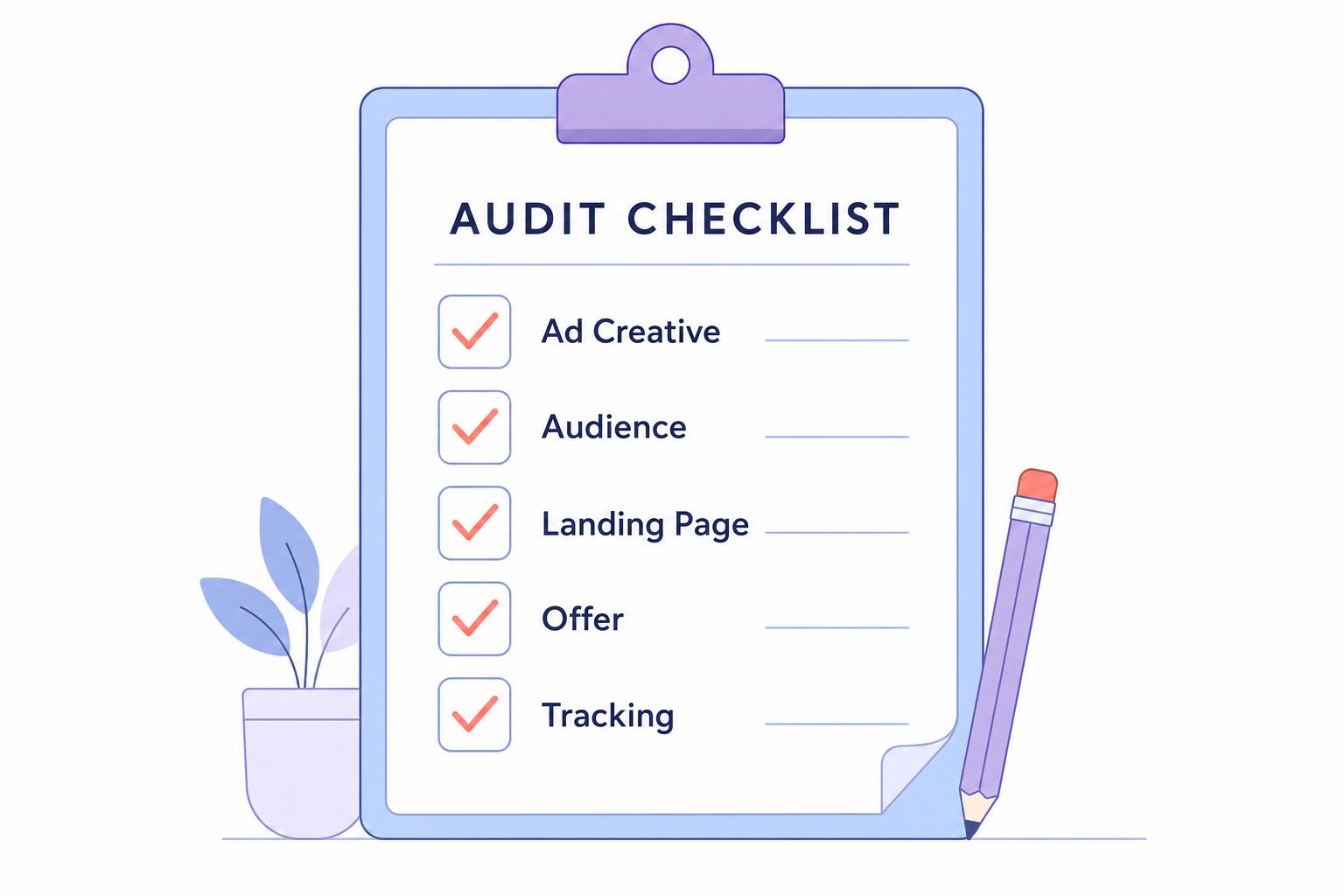
Ad Creative Audit
- Is the audience clear in the ad?
- Does the hook attract the right person or just anyone?
- Is the offer understandable from the ad itself?
- Does the CTA match the next step on the landing page?
- Does the ad create buying intent or only curiosity?
Audience Audit
- Is targeting broad enough to learn but still relevant?
- Are you accidentally attracting low-intent clicks?
- Does the offer fit the awareness level of the audience?
Landing Page Audit
- Does the headline match the ad promise?
- Is the value proposition obvious above the fold?
- Is the CTA visible quickly?
- Is the page mobile-friendly?
- Is there enough proof to build confidence?
Offer Audit
- Is the value clear?
- Is the product or service differentiated enough?
- Is there a reason to convert now?
- Is price resistance addressed?
- Have you reduced risk for first-time buyers?
Tracking Audit
- Are events firing correctly?
- Is Conversions API implemented where needed?
- Are you looking at the right attribution window?
- Do Meta and site-side analytics tell a similar story?
Common Mistakes Advertisers Make When CTR Looks Good
- Celebrating CTR without checking downstream behavior
- Sending traffic to a generic page instead of a focused landing page
- Testing audience, creative, and landing page at the same time
- Using curiosity-heavy hooks that attract low-intent users
- Blaming Meta before reviewing the offer
- Ignoring mobile experience
- Assuming low reported conversions always means low real conversions
When the Problem Is Actually the Offer, Not the Ad
Sometimes the ad is relevant, the audience is decent, and the landing page is clear enough, and still the campaign struggles. Because the offer itself is not strong enough to justify action. Signs include users understanding the product but not feeling urgency, no clear advantage over alternatives, price feeling disconnected from perceived value, and the result or transformation not being specific.
How ScoreMyAd Fits Into This Workflow
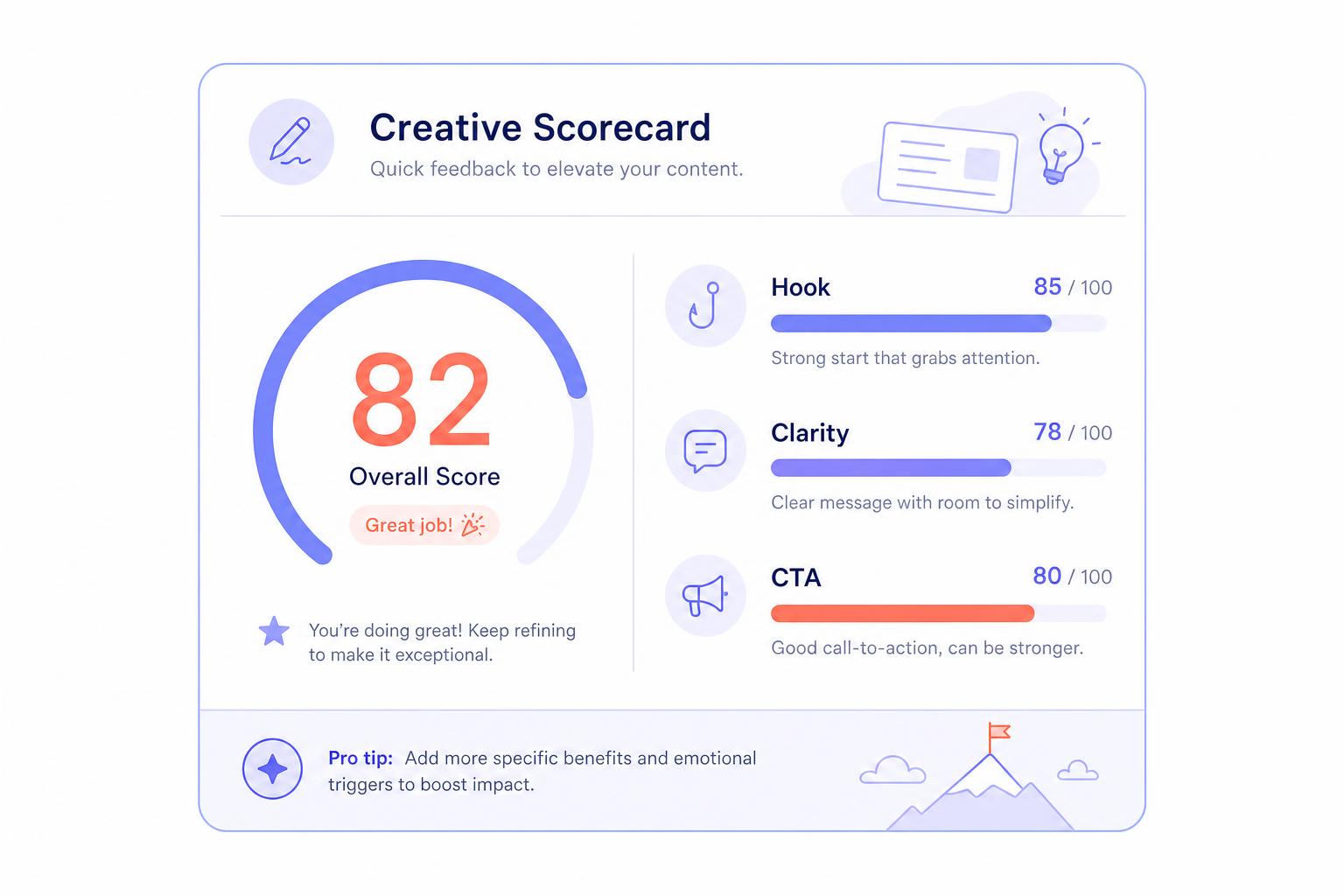
When Meta ads get clicks but not conversions, the worst response is random guessing. A tool like ScoreMyAd helps marketers review whether the ad is likely to attract the right kind of click, not just any click. Before spending more budget, review hook strength, message clarity, qualification, CTA quality, and creative-to-conversion alignment.
Key Takeaways
- Clicks are not proof of purchase intent
- Curiosity-driven ads can attract the wrong kind of traffic
- Landing page message match matters more than most advertisers think
- A weak offer can kill conversion even if the ad is good
- Mobile friction, trust gaps, and checkout complexity reduce conversion fast
- Tracking issues can make a decent campaign look broken
- The best fix starts with diagnosis, not random changes
Frequently Asked Questions
Why are my Meta ads getting clicks but no sales?
Usually because one of five things is broken: the ad is attracting low-intent clicks, the landing page doesn't match the ad, the offer is weak, the page has too much friction, or conversion tracking is inaccurate.
Can a high CTR still mean the ad is bad?
Yes. A high CTR only means the ad got attention. If it attracts curiosity without qualification, it can produce lots of traffic and very little revenue.
How do I know if the problem is the landing page or the ad?
Look at post-click behavior. If users bounce quickly or show confusion, the ad or message match may be the problem. If they stay on the page but still don't convert, the page, offer, trust layer, or checkout flow may be the issue.
What should I fix first if my Meta ads aren't converting?
Start by checking click quality, message match, and landing page clarity. Then review the offer, trust signals, and tracking setup before making bigger campaign changes.
Can Meta Pixel or tracking issues make it look like my ads aren't converting?
Yes. Broken events, missing purchase tracking, duplicate events, or poor Conversions API setup can underreport conversions and lead to bad optimization decisions.
Why do users click my ad but leave the landing page immediately?
This usually points to either poor message match, a misleading or overly broad hook, slow page load, or a landing page that doesn't clearly continue the promise made in the ad.
Should I change the audience or the creative first?
It depends on the diagnosis. If the creative is broad, curiosity-heavy, or poorly qualified, fix the creative first. If the message is solid but the audience is clearly too broad or mismatched, then test audience adjustments.
Does mobile landing page speed affect Meta ad conversions?
Yes. Since a large portion of Meta traffic is mobile, slow or complex mobile pages can hurt conversion rates significantly.
Getting Clicks but Still Not Converting? Use ScoreMyAd to review your Meta ad creative before you waste more budget on clicks that never turn into customers.
Analyze Your Ad Creative